Check out the video on my YouTube channel HERE.
Let’s be honest. Most people walk into open adoption carrying a mental suitcase stuffed with worst-case scenarios. Will it confuse my child? Will the birth parents show up uninvited? Will I feel like a guest in my own family?
These aren’t silly fears. They’re the questions almost every adoptive family wrestles with — usually alone, usually at 2 AM.
What’s genuinely hard to find is someone who can answer them honestly, from the other side, after thirty years of actually living it. Not theorizing about it. Not presenting at a conference about it. Living it.
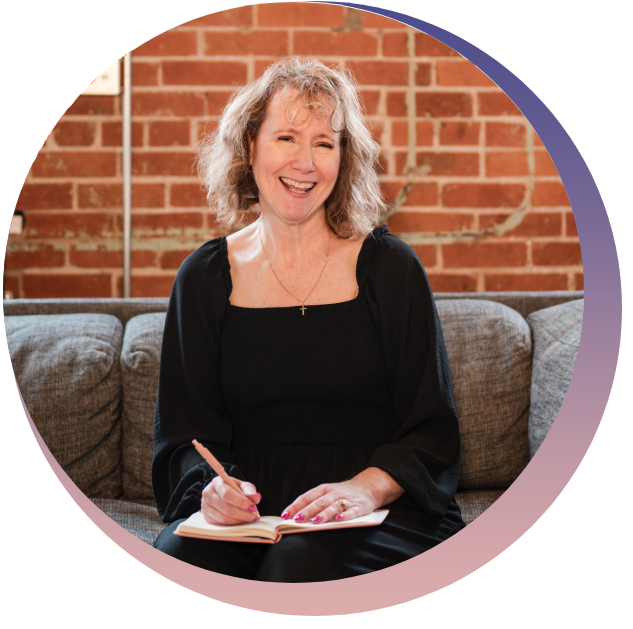
That’s exactly who I sat down with. Linda Sexton is an adoptive mom twice over, an open adoption speaker, and the author of the award-winning book The Branches We Cherish: An Open Adoption Memoir. And here’s the thing — she didn’t start out as an open adoption cheerleader. She started out scared, skeptical, and surrounded by well-meaning friends and family who thought she was making a giant mistake.
What changed her mind wasn’t a book or a seminar. It was living years of real experience.
(And for the record — her author profits go directly to therapy and support for adoptees and birth parents. So buying her book is genuinely doing good. More on that at the end.)
Whether you’re brand new to open adoption or already committed and just trying to figure out how to do it well, this conversation is worth your time.
Fear Is Normal. What You Do With It Is What Matters.
Here’s something the adoption world doesn’t say nearly enough: being afraid of open adoption doesn’t make you a bad person or a bad parent. It makes you human.
What Linda’s story illustrates so well is that fear tends to be loudest before you have real experience to draw from. The stories we tell ourselves in the absence of evidence are almost always scarier than reality. And the antidote isn’t just someone reassuring you it’ll be fine — it’s building actual relationships, having real experiences, and letting those experiences slowly crowd out the fear.
The hard truth: it takes time. It’s not a switch you flip. Linda describes her own transformation as gradual, marked by specific moments that shifted her understanding one piece at a time. If you’re in the early stages and still feeling uneasy — that’s normal. Keep going.
The Mindset Shift That Changes Everything
At some point in Linda’s journey, something clicked: birth families aren’t a threat to her family. They’re part of it.
That might sound simple, but the implications are significant. When you start treating birth parents the way you’d treat any other important person in your family’s life — keeping them in the loop, including them in milestones, not hesitating to share news — the whole dynamic shifts. Decisions get easier. Interactions feel less loaded. And the relationship stops being something you manage and starts being something you actually value.
Linda is honest that she didn’t arrive at this mindset immediately. It came through trial and error, and yes, through getting called out when she got it wrong. But once she got there with her second child, she says the difference was remarkable. What felt complicated the first time felt natural the second time around.
The families who struggle most with open adoption are often the ones treating birth parent relationships as something to be carefully controlled rather than genuinely cultivated. That posture creates tension — for everyone, including the child.
Birth Fathers Are Part of the Picture Too
When we talk about open adoption, the conversation almost always gravitates toward birth mothers. And there are real reasons for that — birth mothers are typically more involved in the placement process, more present, more connected.
But focusing exclusively on that relationship while letting the birth father connection quietly fade into the background can have consequences that don’t show up until years later.
Linda learned this the hard way. What she shares in this conversation about the impact of a distant or absent birth father on a child’s sense of identity is something every adoptive family should hear — especially those who’ve assumed that one strong birth family connection is enough.
For families where the birth father is unknown or unreachable, Linda’s advice is practical: don’t stop there. Look for someone from the birth father’s family — a grandparent, an aunt or uncle, a sibling. There is often someone on that side who is stable, willing, and would genuinely welcome a connection. It takes effort. The payoff for your child is real.
Sibling Connections Run Deeper Than You’d Expect
One of the more surprising themes in Linda’s experience — and one that comes up again and again in adoptee stories — is just how significant birth sibling relationships are. Not just birth parents. Siblings.
Linda’s adult children both have ongoing connections with their biological families, and when she observes those relationships today, it’s the sibling bonds that generate the most visible joy. Research backs this up: when adoptees search for and find their biological families later in life, the connections they often form most deeply are with siblings.
If your child has birth siblings — or may have them in the future — it’s worth thinking intentionally about how to nurture those connections. They may matter more to your child than you expect.
Open Adoption Doesn’t Erase Adoption-Related Challenges
This is probably the most important thing Linda says in the entire conversation, so let’s say it plainly: open adoption has real, meaningful benefits for children. But it is not a solution to every adoption-related challenge. It does not hand your child a clean slate.
The concept of the primal wound — the idea that early separation from a birth parent carries emotional weight even without conscious memory — is something Linda encountered only after writing her book. Looking back, she could see signs in her own children she hadn’t recognized at the time. Signs she might have understood differently if she’d known what to look for.
One of the mistakes she made: when her teenagers were struggling, she didn’t seek out an adoption-competent therapist. She assumed their difficulties had nothing to do with adoption because the adoption was open. That assumption cost time.
If your child is struggling and you haven’t considered whether adoption-related dynamics might be part of the picture — it’s worth exploring, regardless of how open or positive the adoption has been. An adoption-competent therapist isn’t a last resort. It’s part of doing this well.
And for anyone who believes that adopting an infant means bypassing the harder layers that come with older child adoption: Linda’s experience, and a growing body of research, suggests that isn’t quite right. The impact of early separation is real. Acknowledging it isn’t cause for alarm — it’s just good parenting.
The Long View Is the One That Matters
Most adoption content focuses on the beginning — the process, the paperwork, the placement, the early months. What Linda offers is something rarer: a look at what open adoption actually looks like over decades. The full arc, not just the highlight reel.
What she’s found after thirty years is that she’s still learning. Relationships evolve. Children grow up and eventually take ownership of their own connections with their biological families. And the investment made during the early years — the effort to stay connected, to treat birth families as family, to keep the door open even when it felt uncomfortable — pays off in ways that are impossible to predict from the starting line.
Linda’s summary for families who are scared: you are in control. Once the adoption is finalized, it’s the adoptive parents who set the tone and maintain the relationships. That’s not a burden — it’s an opportunity. Use it well.
About Linda and Her Book
Linda’s book, The Branches We Cherish: An Open Adoption Memoir, is available on Amazon, Bookshop, Audible, and wherever books are sold — hardback, paperback, Kindle, and audiobook. My personal recommendation is the audiobook.
And that detail worth highlighting up front: all of Linda’s author profits go directly to providing support and therapy for adoptees and birth parents. Buying the book means something beyond the read.
You can connect with Linda, read her blog, and learn about her speaking work at lindarsexton.com. She’s genuinely open to connecting with families navigating open adoption.
Curious what open adoption could look like for your family? We’ve been walking alongside adoptive families for 28 years — and we’d love to talk. Schedule a Free Consultation.
Disclaimer: This blog post is provided for educational and informational purposes only and does not constitute legal or professional advice. Open adoption contact agreements (PACAs) vary by state — check with your agency and attorney for guidance specific to your situation. Adoption & Beyond, Inc. retains all copyrights to original content presented here.